





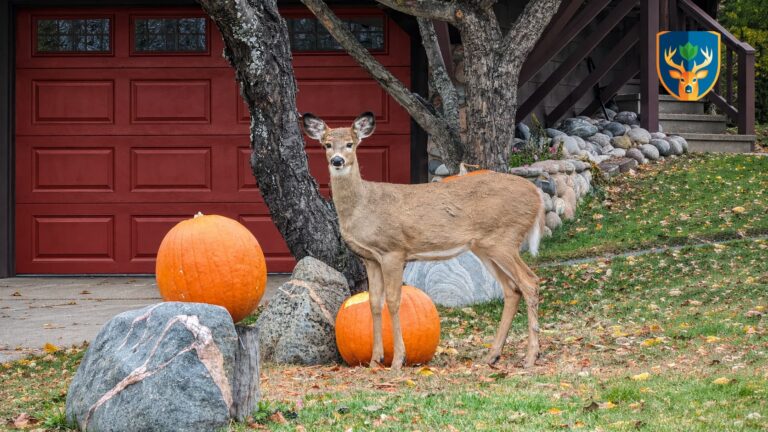
The answer to “do deer eat pumpkins?” is yes: deer eat pumpkins. UConn’s Home and Garden Education Center includes pumpkins among the fruits and vegetables deer damage or feed on.
UMass Extension lists pumpkins among the crops most susceptible to deer, and Colorado Parks and Wildlife reported that mule deer ate pumpkins left out in a Durango, Colorado, neighborhood.
Here is how pumpkins fit into a deer’s fall diet, which parts of the plant deer target, how to tell deer have been at your pumpkins, and how to care for the landscape around them.
Pumpkins and the Fall Deer Diet
Pumpkins are out in yards and gardens at the time of year when fruits and nuts make up a large part of a deer’s diet, from late summer to early winter, as Penn State Extension notes.
In autumn, deer also eat mast such as acorns as they build fat reserves for winter, according to University of Minnesota Extension.
UMass Extension names pumpkins, squash, beans, peas, lettuce and strawberries among the crops most susceptible to deer, and UConn’s Home and Garden Education Center lists pumpkins among the fruits and vegetables deer damage or feed on.
In Colorado, pumpkins set out for the season have drawn deer as well. In a Durango neighborhood, mule deer ate pumpkins residents had left out, and Colorado Parks and Wildlife asks people to dispose of pumpkins after Halloween rather than leave them where wildlife can reach them.
Pumpkins are only one item on a long list. UMass Extension notes that deer eat well over 700 plant species, and our plant-by-plant deer guides cover what deer favor across the rest of a landscape.
Which Parts of the Plant Deer Target
Deer go after the pumpkin itself, and the leaves and stems of a garden can suffer too.
- The fruit. Deer gnaw pumpkins and squash and leave tooth marks in the fruit, according to UMass Extension, and those marks can later rot.
- Leaves and stems. Deer have no upper incisors, so they tear leaves and stems rather than cutting them, leaving jagged edges, as UConn describes for fruits and vegetables in general.
- Vines. The University of California’s IPM program lists vines and garden vegetables among the plants deer eat in California. It speaks of vines in general rather than pumpkin vines.
- Whole plants underfoot. Deer also trample crops as they move through a garden, UConn notes.
A pumpkin with tooth marks is worth a closer look as the weeks go on, since the damaged spots can rot.
Signs Deer Have Been Eating Your Pumpkins
Common signs are torn, jagged damage, tooth marks in the pumpkin itself, and split-hoof tracks nearby. A few checks help tell deer from other animals:
- Edge quality. Deer lack upper incisors and tear plants, leaving a torn, jagged look, while rabbits and rodents clip stems neatly at about a 45-degree angle, according to University of Maryland Extension.
- Tooth marks. Deer leave tooth marks in pumpkins and squash, UMass Extension notes.
- Height. On shrubs and trees near the patch, the height of damage can help rule out other animals, as Penn State Extension and University of Maryland Extension explain.
- Tracks. Deer leave cloven, split-hoof tracks, as both UMass Extension and Penn State Extension describe.
- Droppings and trails. In California, the University of California’s IPM program suggests looking for tracks, droppings, and trails to confirm deer.
- Trampling. Flattened plants around the patch can point to deer moving through, since deer trample crops, according to UConn.
Timing helps as well. Deer feed mostly in the early morning and evening, according to UConn and Penn State Extension, so those are the hours to watch for them.
How to Protect Pumpkins & Fall Displays from Deer
Protecting pumpkins starts with acting early and not leaving them out longer than the season calls for.
- Act as soon as deer appear. University of Maryland Extension advises acting as soon as deer show up, before a habit forms, and alternating methods.
- Clear away pumpkins after the season. Colorado Parks and Wildlife asks residents to dispose of pumpkins after Halloween rather than leave them out for wildlife.
- Expect deer to get used to scare devices. Deer grow used to noise devices within days or weeks, UMass Extension notes.
- Consider fencing for a larger garden. UMass Extension and UConn point to fencing as the most effective long-term barrier. A fence is a bigger project, and it needs ongoing upkeep to keep working.
Our service does not cover pumpkins or other edible crops. The ornamental landscaping around them is a different matter. A recurring treatment program provides professional protection for the shrubs, flowers, and garden beds near your porch and garden, helping look after the plants you count on all year while the pumpkins come and go.
How Deer Solution® Helps Protect Your Landscape
Deer Solution helps protect the shrubs, flowers, and garden beds around your home with a recurring professional repellent service built around your property.
Your local Deer Solution team combines Certified Deer Damage Expert® expertise, highly trained technicians, proprietary liquid and granular repellents, and ongoing support to build a treatment program around your property and deer pressure.
Deer drawn in by pumpkins are already beside the rest of the landscape. UNH Extension notes that feeding deer concentrates them and leads to over-browsing of ornamental plants.
The repellent relies on natural ingredients, including essential oils, and works by taste and smell instead of a physical barrier. It dries clear, carries no foul odor once set, and is rain-fast once dry.
Programs are built around your property, your plantings, and the deer pressure in your area, then adjusted with you as the season goes on. No repellent makes a plant untouchable, and no service can promise deer will avoid your yard entirely.
Most customers get recurring professional treatments, typically monthly, with extra visits scheduled when the program and deer pressure call for them. Service runs year-round because deer browse in every season.
Frequently Asked Questions About Deer and Pumpkins
Do deer eat pumpkin vines and leaves, or just the fruit?
Deer eat pumpkin fruit, gnawing it and leaving tooth marks that can rot, according to UMass Extension. UConn describes deer tearing leaves and stems of fruits and vegetables generally, leaving jagged edges rather than a clean cut, and the University of California’s IPM program lists vines among plants deer eat in California, not pumpkin vines by name.
Will deer eat carved or decorated pumpkins the same as whole ones?
Carved pumpkins left outdoors can still draw deer. Colorado Parks and Wildlife advises disposing of carved jack-o’-lanterns after Halloween rather than leaving them where wildlife can reach them, and reported mule deer eating pumpkins left out in a Durango, Colorado, neighborhood.
Do deer eat other squash and gourds besides pumpkins?
Yes, deer eat other squash besides pumpkins. UMass Extension lists squash among the crops most susceptible to deer, while UConn places summer and winter squash among plants deer damage occasionally. A small University of Arizona survey of mule deer placed squash, and most gourd reports, in its least-damaged group.
Should you leave pumpkins out for deer to eat, or does that cause more damage?
Wildlife agencies advise against it. Colorado Parks and Wildlife asks people not to leave pumpkins out for wildlife, and UNH Extension in New Hampshire notes that feeding deer concentrates them and leads to over-browsing of ornamental plants. Your local Deer Solution team can help protect the ornamental landscaping deer visit.
Talk to a Certified Deer Damage Expert About Your Landscape
Deer that come for pumpkins in the fall are already in your yard, close to the shrubs, flowers, and garden beds you have worked hard to grow. Those plantings are what a recurring repellent program looks after through fall and into winter. Schedule a Free Consultation, find your local Deer Solution team, or call (888) 503-8313.


