





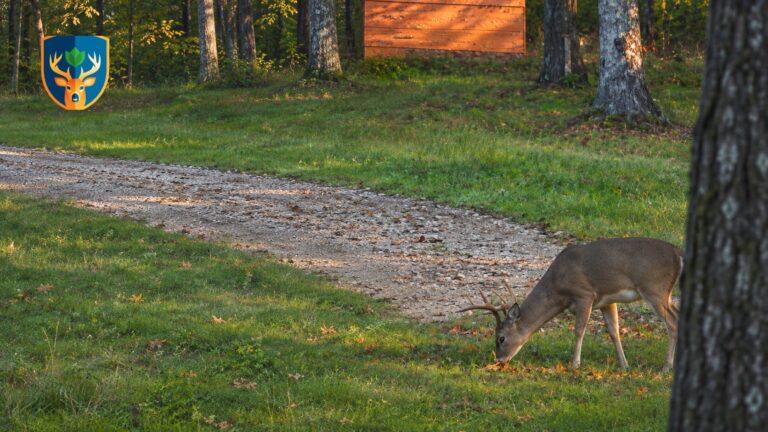
The answer to “do deer eat acorns?” is yes: acorns are one of the most important fall foods for white-tailed deer. Here is how acorns fit into a deer’s fall diet, why oak trees can draw deer close to a home, and what that means for nearby landscaping.
Why Do Deer Eat So Many Acorns in Fall?
Deer eat so many acorns in fall because acorns are a key “mast crop,” the yearly nut and seed drop from trees like oaks, and autumn is when animals need extra food ahead of winter, according to UF/IFAS.
White oak acorns carry lower tannin levels and are typically more palatable to wildlife, according to a University of Florida IFAS publication. When acorns are plentiful, wildlife eat more white oak acorns than red oak acorns, which run higher in tannins and fiber. Red oak acorns stay on the ground longer and become more important to wildlife later in the winter, the same UF/IFAS publication notes.
In autumns when acorns are abundant, deer may spend more time in oak-dominated woods, the same UF/IFAS publication notes.
How big that crop is varies sharply from year to year. Weather plays a large role, and late spring freezes, extreme heat, and summer drought can all reduce pollination and acorn production, per Purdue Extension. The University of Tennessee Arboretum adds that broader weather and climate swings play a role in the year-to-year difference, even though the full picture is not settled. Acorn crops vary from tree to tree and year to year, per Purdue Extension, so a heavy crop followed by a lighter one is normal and not a sign anything changed about the yard itself.
Homeowners sorting out which plants in their own yard draw deer can find that the oak tree is only one part of a longer list. Pumpkins and other fall displays can be on that list too, since deer readily eat pumpkins.
Why Oak Trees Draw Deer Closer to Your Home
Oak trees can draw deer closer to a home because acorns are a highly sought-after food for deer, Clemson Extension notes. In suburban and urban settings, deer also commonly rely on residential landscaping and gardens for food. A mature oak dropping acorns onto a lawn or driveway can give deer a reason to linger close to the house, not just pass through.
A homeowner who sees more deer near the house in fall may be seeing the acorn drop at work. It can overlap with deer rut season, and autumn is the prime time for deer to be on the move, PennDOT notes.
What Landscape Damage Do Deer Cause Near Oak Trees?
Deer drawn to oak trees can damage more than the acorn crop. In residential areas, deer often target flowerbeds and damage gardens as they browse, Clemson Extension notes, so the plantings near an oak are worth watching.
Deer lack upper incisors, which is why they leave leaves and small branches with a rough, torn edge instead of a clean cut, University of Maryland Extension explains.
A torn, ragged edge on a shrub near the base of an oak tree points to deer, while a clean 45-degree cut usually points to rabbits instead, per the same University of Minnesota Extension guide. Either way, the shrubs, flowers, and garden beds within reach of an oak tree’s canopy are worth a second look once acorns start falling.
How Do You Reduce Deer Damage Near Oak Trees?
You reduce deer damage near oak trees by protecting what is planted nearby. Deer Solution® builds a customized protection plan around the shrubs, flowers, and garden beds closest to an oak tree, so a professional deer repellent service covers the whole bed under the canopy, not just the tree itself.
A Certified Deer Damage Expert® reviews the property, the oak trees and other plantings, and the level of deer pressure before recommending a plan. The proprietary repellent is all-natural, made with essential oils and other natural ingredients, and works through taste and smell to make treated landscaping less appealing to deer.
It dries clear, has no foul odor once dry, and is rain-fast. Most customers get recurring professional treatments, typically monthly, with extra visits scheduled when the program and deer pressure call for them. Service runs year-round because deer browse in every season. No repellent makes a plant untouchable. Regular treatments help protect the shrubs and flowers nearby.
Frequently Asked Questions About Deer and Acorns
Are acorns toxic to deer in large amounts?
Large amounts of acorn tannins can make livestock sick, per the Merck Veterinary Manual, which notes that mule deer tolerate higher tannin doses than cattle or sheep. One NC State Extension article suggests deer may avoid the toxin by shelling acorns, though this is not confirmed for deer.
Do deer eat acorns before or after other food sources?
Acorns become a major part of a deer diet as soon as they start falling. White oak acorns get eaten first, since they are more palatable, while red oak acorns stay available longer and matter more later in the season, per UF/IFAS.
Does raking up fallen acorns reduce deer visits to my yard?
Raking removes some of the acorns deer seek out, but it does not stop the tree from dropping more, so the ornamental plants nearby still need their own protection against browsing.
Does having oak trees in my yard mean I’ll have a deer damage problem?
Oak trees can draw more deer, since acorns are a highly sought-after food for deer, but they do not make damage certain on their own. A local Deer Solution team can review the plantings most at risk.
Talk to a Certified Deer Damage Expert About Your Landscape
An oak tree dropping acorns can bring deer onto a property, and the shrubs and flowers nearby are worth protecting. Schedule a Free Consultation, find your local Deer Solution team, or call (888) 503-8313.


