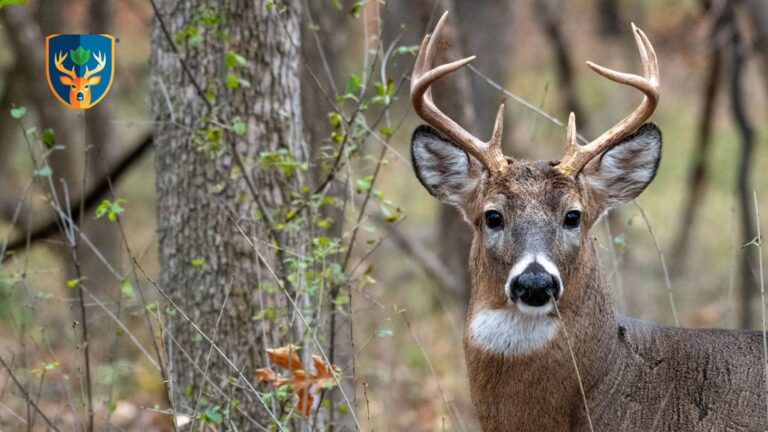




Deer-resistant fall flowers are plants deer usually pass over because of their smell, taste, or texture.
Rutgers Cooperative Extension rates ornamental plants on a four-tier scale, from A (Rarely Damaged) to D (Frequently Severely Damaged), and notes that how any plant fares depends on local conditions.
Russian sage, salvia, lavender, and other fall bloomers appear on extension deer-resistance lists. Fall mums and pansies receive lower ratings, so knowing the difference before planting can help you plan a fall bed.
Deer-Resistant vs. Deer-Proof: Why the Distinction Matters
A deer-resistant plant is one deer usually skip because of its scent, taste, or texture, while deer-proof implies a guarantee no landscape plant actually offers.
Rutgers Cooperative Extension rates ornamental plants on a four-tier scale, from A (Rarely Damaged) to D (Frequently Severely Damaged).
Asters show how that resistance works in practice. Rutgers Cooperative Extension’s deer-resistant plant list rates asters as Seldom Severely Damaged (B), the second of its four tiers, so deer can still damage them now and then.
That gap between “usually skipped” and “left alone every time” is the real limit of deer resistance, and it holds for nearly every plant on a deer-resistant plant list, not just asters.
What Are the Best Deer-Resistant Fall Flowers?
These 12 fall flowers rate well on the Rutgers list:
- Russian sage. Rutgers rates Russian sage as Rarely Damaged (A).
- Salvia. Rutgers lists meadow sage as Seldom Severely Damaged (B).
- Lavender. Rutgers lists lavender, spelled “Lavendar” on its page, as Rarely Damaged (A).
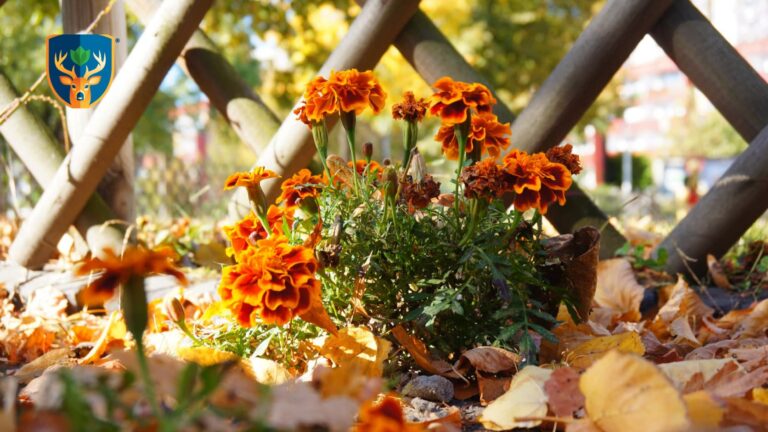
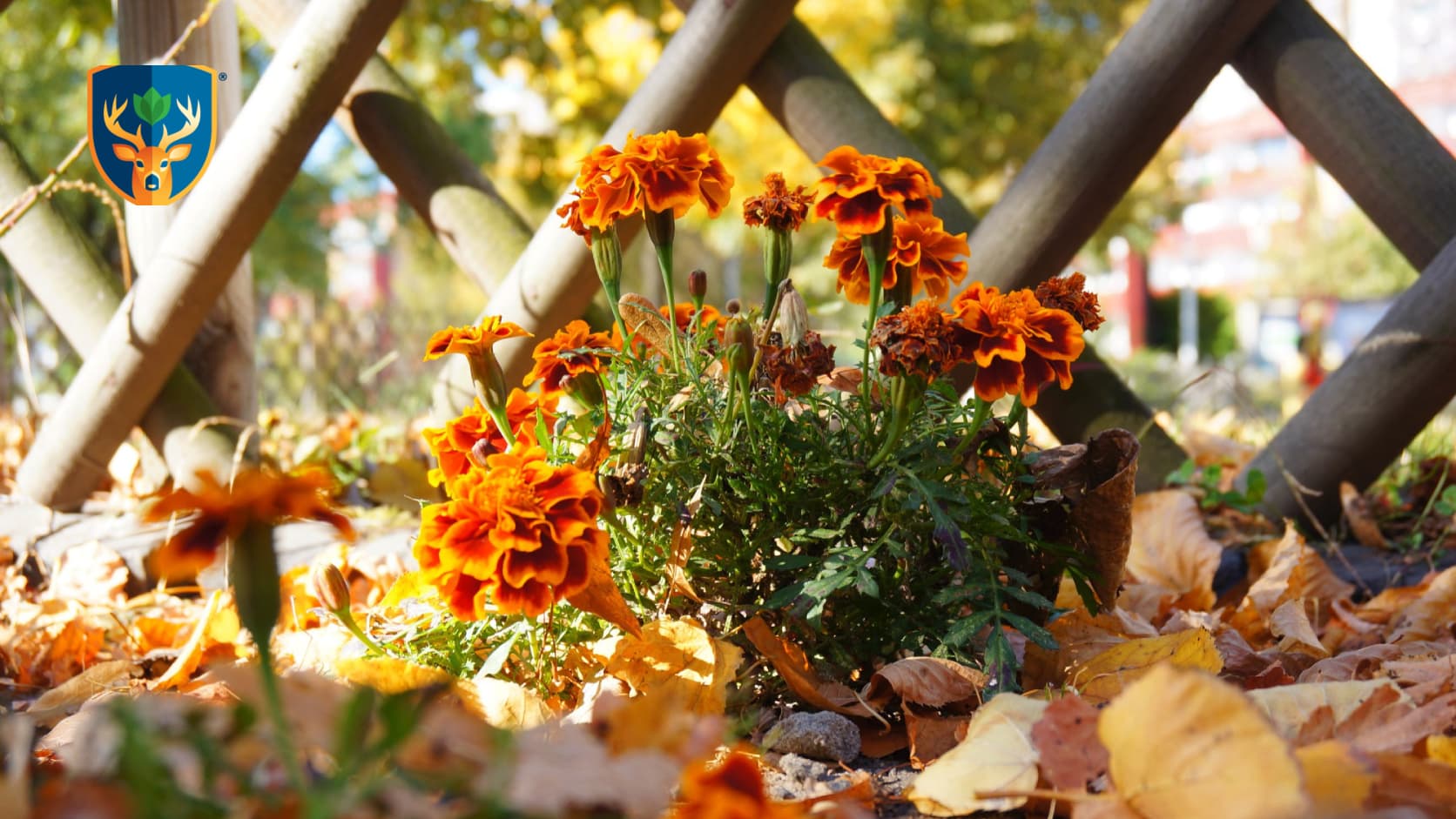
- Marigolds. Rutgers rates French marigold as Seldom Severely Damaged (B).
- Sweet alyssum. Rutgers rates sweet alyssum as Rarely Damaged (A).
- Catmint. Rutgers rates catmint Rarely Damaged (A).
- Asters. Rutgers rates asters Seldom Severely Damaged (B).
- Anise hyssop. Rutgers rates anise hyssop (Agastache) as Rarely Damaged (A). Wisconsin Horticulture describes flower spikes forming by midsummer and blooming through fall.
- Autumn crocus. Rutgers rates autumn crocus (Colchicum) as Rarely Damaged (A). Wisconsin Horticulture notes it blooms in September in the Midwest, after the leaves have died back.
- Threadleaf coreopsis. Rutgers rates threadleaf coreopsis as Rarely Damaged (A).
- Snapdragons. Rutgers rates snapdragons as Rarely Damaged (A). Illinois Extension calls them very cold tolerant and good for fall planting, with a bloom season running into October.
- Pot marigold. Rutgers rates pot marigold (Calendula) as Rarely Damaged (A).
Ornamental grasses are commonly considered deer-resistant, though deer may still browse them under pressure. Rutgers rates switchgrass as Rarely Damaged (A), and its list notes that no plant is fully protected.
Are Mums and Pansies Deer Resistant?
Mums and pansies are not among the stronger-rated choices on the Rutgers list. Rutgers’ deer-resistance scale rates fall mums and pansies as Occasionally Severely Damaged (C).
Rutgers Cooperative Extension’s deer-resistant plant list rates fall mums as Occasionally Severely Damaged (C). Pansies carry that same C rating.
Mums and pansies do better paired with a resistant border or a recurring repellent program than planted alone.
How Do You Protect Deer-Resistant Plants from Browsing?
You protect deer-resistant plants from browsing by combining plant choice with an active repellent program.
Even resistant plants get browsed under pressure, so a professional deer repellent service protects the whole bed, not just the toughest plants in it. Deer Solution® starts every protection plan with a review of the property by a Certified Deer Damage Expert®, who notes which beds, resistant or not, carry the heaviest deer pressure before any treatment begins.
Most customers get recurring professional treatments, typically monthly, with more worked in when the program and deer pressure call for them. None of the plants on this list are untouchable, just less appealing, so a heavy-pressure year can still bring occasional browsing even to a resistant bed. Ongoing treatments help keep that browsing from spreading to the rest of the yard.
Frequently Asked Questions About Deer-Resistant Fall Flowers
What does “deer-resistant” really mean?
Deer-resistant means deer usually avoid a plant because of its smell, taste, or texture. It does not mean complete protection, which no landscape plant actually offers. Even plants Rutgers rates as Rarely Damaged (A) can still be browsed, since no plant is fully protected.
Do deer-resistant plants still need protection?
Deer-resistant plants can still benefit from added protection. Resistance lowers the odds of damage but does not remove them. Pairing resistant choices with a recurring repellent program helps in both situations.
What are the best deer-resistant plants for a shady fall bed?
Rutgers rates many ferns as Rarely Damaged (A) and coral bells as Seldom Severely Damaged (B) on its deer-resistance list, so both can be considered for a shady fall bed.
Will deer still eat mums or asters even though they’re sold as “deer-resistant”?
Rutgers rates fall mums as Occasionally Severely Damaged (C). Rutgers rates asters as Seldom Severely Damaged (B), so they can still be damaged. Neither is fully protected on its own, so pairing both with a protection plan makes sense for a fall bed.
Talk to a Certified Deer Damage Expert About Your Landscape
A fall bed built entirely from deer-resistant choices can still see browsing. Schedule a Free Consultation, find your local Deer Solution team, or call (888) 503-8313.