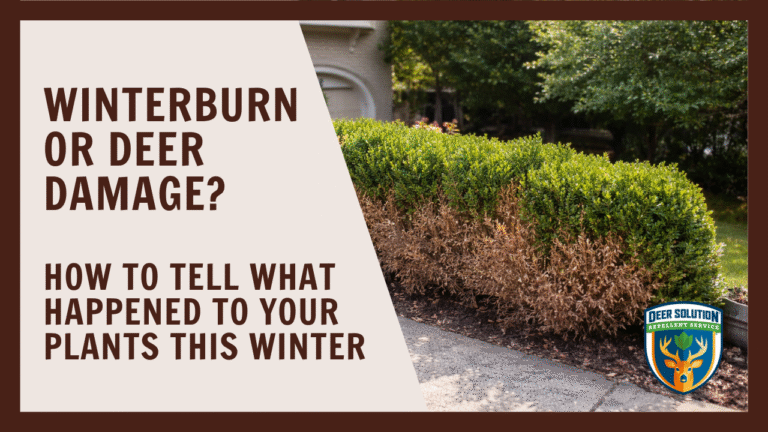





Across West Michigan, homeowners are facing a growing and frustrating reality: deer are no longer occasional visitors, they are daily pressure on landscapes that people have invested years building.
Recent conversations among nursery professionals and gardeners across the state point to a clear trend. Deer are targeting some of Michigan’s most commonly planted evergreens and ornamentals, often with repeated, aggressive feeding that leaves plants disfigured or completely destroyed. What was once considered “relatively safe” planting is no longer off the menu.
For homeowners, this shift can feel sudden. One season, a row of evergreens provides privacy and structure. The next, those same plants are thinned out, misshapen, or declining altogether.
Why Deer Pressure Is Increasing in West Michigan
West Michigan offers an ideal environment for deer populations to thrive. Mild suburban development patterns, access to wooded cover, and limited natural predators create a perfect balance of shelter and food. As communities expand into previously rural or wooded areas, deer don’t disappear. They adapt.
Landscapes, in many cases, become their most reliable food source.
Unlike wild forage, which changes seasonally and can become scarce, residential plantings are consistent, irrigated, and often more nutritious. Evergreen shrubs, in particular, become critical food sources during late fall, winter, and early spring when other options are limited.
This is when homeowners tend to see the most severe damage.
The Myth of “Deer-Resistant” Plants
One of the most common frustrations for homeowners is hearing that a plant is “deer-resistant,” only to watch it get eaten anyway.
The reality is that deer feeding behavior is highly situational. Factors like herd density, weather conditions, seasonal food availability, and even neighborhood-level pressure all influence what deer will or won’t eat.
In high-pressure areas of West Michigan, deer often expand their diet well beyond their typical preferences. Plants that might be avoided in one region can become primary targets in another.
Evergreens, especially those used for screening or foundation planting, are particularly vulnerable. Once deer begin feeding on them, they often return repeatedly, compounding the damage over time.
Why Damage Looks Worse Than It Is
Deer don’t just “nibble.” Their feeding patterns can significantly alter the structure and health of a plant.
Repeated browsing can strip foliage unevenly, leaving plants lopsided or sparse. In many evergreens, this kind of damage doesn’t regenerate easily. Once the structure is compromised, recovery can take years, if it happens at all.
For homeowners, this creates a compounding issue. Not only are plants being eaten, but the long-term appearance and function of the landscape is affected. Privacy screens thin out. Garden beds lose their shape. Carefully designed layouts start to look inconsistent.
Why DIY Solutions Often Fall Short
Many homeowners in West Michigan try to manage deer damage on their own. Store-bought repellents, homemade mixtures, fencing attempts, and noise deterrents are all common first steps.
While some of these methods can provide short-term relief, they often struggle to keep up with sustained deer pressure.
Repellents wear off, especially in Michigan’s variable weather conditions. Rain, snow, and temperature swings can quickly reduce their effectiveness. Inconsistent application also plays a role. Deer are persistent, and even small gaps in protection can lead to renewed feeding.
Over time, many homeowners find themselves in a cycle of reapplying products, trying new solutions, and still seeing damage return.
A More Consistent Approach to Protection
Managing deer pressure in a place like West Michigan requires consistency more than anything else.
Rather than reacting to damage after it happens, a proactive approach focuses on making the landscape less desirable on an ongoing basis. This means maintaining a regular presence of deterrent across the property, adjusted for seasonal conditions and plant growth cycles.
That is where a professional service model can make a meaningful difference.
Deer Solution’s approach is built around scheduled applications throughout the growing season, using all-natural repellent products that are designed to adapt with changing conditions. Instead of relying on one-time treatments or inconsistent coverage, the focus is on maintaining protection as deer behavior shifts from season to season.
Why Local Knowledge Matters
Not all deer pressure is the same, even within West Michigan.
Properties near wooded corridors, water sources, or agricultural edges often experience higher activity. Neighborhood density, landscaping styles, and even nearby feeding patterns can influence how deer move and feed.
Having a localized understanding of these patterns allows for a more tailored approach to protection. What works in one part of the region may not be enough in another.
Setting Realistic Expectations
It is important to approach deer management with the right expectations. No solution can guarantee that deer will never enter a property or never take a bite.
The goal is to significantly reduce feeding damage and protect the overall health and appearance of the landscape.
With a consistent and well-maintained approach, homeowners can preserve their plantings, maintain curb appeal, and avoid the cycle of repeated loss and replacement that so many experience.
A Smarter Way to Protect Your Landscape
For homeowners in West Michigan, the challenge is not just dealing with deer. It is managing a growing, persistent pressure that continues to evolve.
Understanding deer behavior, recognizing the limitations of one-time solutions, and implementing a consistent protection strategy can make a substantial difference over time.
For those looking for a more reliable way to manage deer damage, Deer Solution offers a proven, service-based approach designed to work with the realities of today’s deer populations.
The landscape you’ve built is worth protecting.