



If your shrubs or evergreens are looking rough this spring, you’re not alone. Many people step outside after winter and notice plants that look scorched, chewed up, or just not as healthy as they used to be. It’s frustrating, especially if everything looked fine just a few months ago.
So what happened?
In most cases, it comes down to one of two things: winterburn or deer damage. They can look similar at first, but they’re caused by very different factors and need very different solutions.
Why Plants Look Damaged After Winter
Evergreens keep their needles or leaves year-round, which makes them more vulnerable during the winter. Even in cold weather, they continue to lose moisture. When conditions are harsh, that can lead to visible damage by the time spring arrives.
At the same time, winter is also when food becomes scarce for wildlife, especially deer. That’s when landscapes often become a food source.
Understanding which of these is affecting your plants is the key to knowing what to do next.
What is Winterburn?
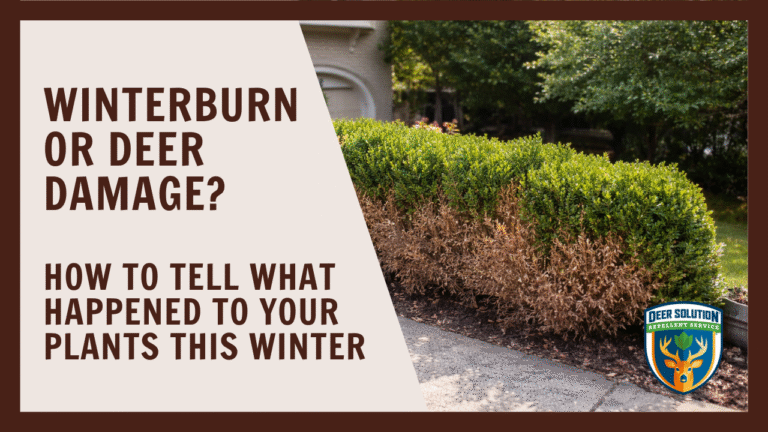
Winterburn is caused by environmental stress. Cold winds and winter sun pull moisture out of evergreen leaves, but if the ground is frozen, the plant can’t replace that moisture through its roots.
Over time, the plant essentially dries out.
By early spring, that dehydration shows up as browning foliage.
What it looks like:
- Brown, dry, or crispy tips
- Entire sections of foliage turning brown
- Damage that often appears evenly or on one side of the plant
- Browning that starts on the outer edges or top
A common clue is location. The side of the plant facing wind or direct sun is often the most affected.
What is Deer Damage?
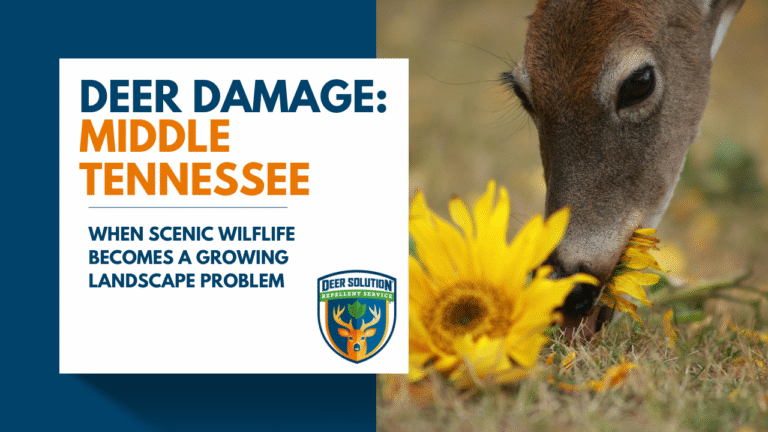
Deer damage is more obvious once you know what to look for. During the winter, deer rely on whatever food they can find, and ornamental plants are often an easy target.
Evergreens like arborvitae and yews are especially vulnerable.
Unlike winterburn, deer damage is not uniform. It’s physical and uneven because deer are actively feeding.
What it looks like:
- Ragged, torn edges where foliage has been eaten
- Missing chunks or thinned-out sections
- Chewed stems or blunt branch ends
- Damage that often starts lower on the plant and works upward
In areas with frequent deer activity, plants can be significantly reduced over a single winter.
How to Tell the Difference When you’re trying to figure out what happened, look closely at the pattern of damage.
- If the plant looks evenly browned, especially on one side, it’s likely winterburn.
- If parts of the plant are missing or look torn and uneven, deer are usually the cause.
Another clue is consistency. Winterburn tends to affect plants in a similar way across a property, while deer damage may vary depending on what the deer chose to eat.
Why It Matters
It’s easy to assume all winter damage is the same, but treating the wrong problem won’t fix anything.
If winterburn is the issue, the focus should be on helping the plant retain moisture and recover.
If deer are the cause, the problem will likely continue unless steps are taken to keep them from feeding on your plants.
What You Can Do
For winterburn:
- Water evergreens well in the fall before the ground freezes
- Consider using anti-desiccant sprays to help reduce moisture loss
- Plant in areas with some protection from wind and harsh sun
For deer damage:
- Use barriers like netting or fencing for vulnerable plants
- Apply deer repellents consistently throughout the season
- Stay proactive, especially during the winter months when food is scarce
A Helpful Tip Going Forward
One of the biggest surprises for homeowners is how much damage can happen during the winter without being noticed. Snow cover and dormant landscapes can hide the problem until spring.
Taking a closer look now can help you understand what your plants went through and what they may need moving forward.
Because while the damage shows up in spring, the cause almost always started months earlier.