



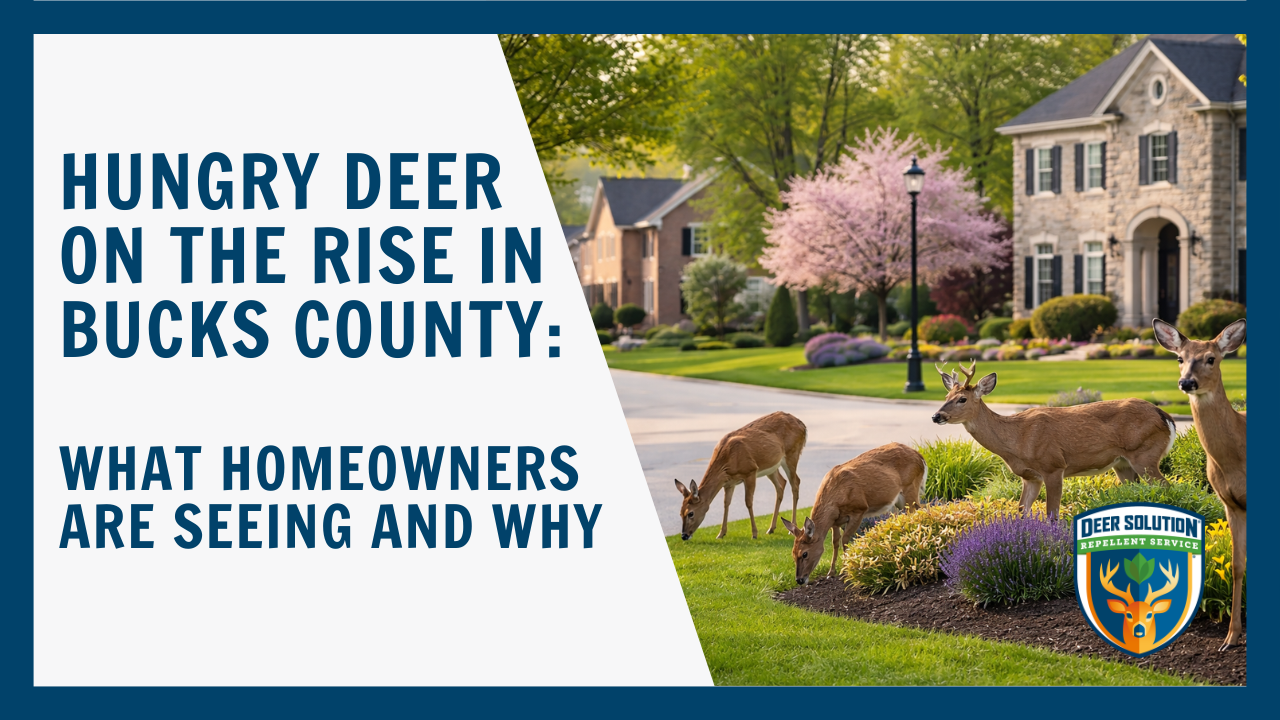
Recent local reporting has highlighted a noticeable uptick in deer activity across Bucks County, with many residents observing more frequent sightings and increased browsing pressure on landscapes. While this can feel sudden, it is part of a broader pattern tied to how deer adapt to changing conditions in suburban environments.
White-tailed deer are highly adaptable animals, and Bucks County offers an ideal mix of habitat and food sources. Residential neighborhoods, parks, and preserved land create what wildlife experts call “edge habitat,” where wooded cover meets open, landscaped spaces. These areas provide both safety and a steady supply of food, allowing deer populations to thrive close to people.
What many homeowners are noticing now is not just more deer, but hungrier deer. Seasonal transitions, weather patterns, and natural food availability all play a role. When native food sources are limited, especially in late winter and early spring, deer turn to the most accessible and nutritious options available, which often means ornamental landscaping. In Bucks County, this shift has led to increased feeding on plants that may not have been targeted as heavily in the past, as deer expand their diets to meet nutritional needs.
At the same time, deer populations remain robust across Pennsylvania. Recent data from the Pennsylvania Game Commission shows overall harvest numbers increasing year over year, reflecting a large and active deer population statewide. Even with management efforts in place, local herd densities can remain high enough to create consistent pressure on residential landscapes. This combination of abundant deer, limited natural forage at certain times of year, and the availability of well-maintained gardens helps explain why damage can feel more intense or widespread. Deer are browsers by nature, feeding on woody shoots, buds, and tender growth. They tend to revisit reliable food sources, meaning that once a property becomes part of their routine, the impact can compound over time.
For homeowners in areas like New Hope and the surrounding communities, understanding this behavior is key. Deer activity is not random. It is driven by survival needs, seasonal patterns, and learned habits. Recognizing why deer are feeding more aggressively can help explain everything from stripped shrubs to repeated nightly visits.
Local providers like Deer Solution of New Hope often see these patterns play out firsthand across the region. Their work in the area reflects a broader reality in Bucks County: managing deer impact is less about reacting to a single event and more about understanding an ongoing interaction between wildlife and the suburban landscape.
As deer continue to adapt to life alongside people, Bucks County residents are likely to keep seeing them, especially in neighborhoods that offer consistent food sources. The challenge is not simply the presence of deer, but the conditions that make them return again and again.