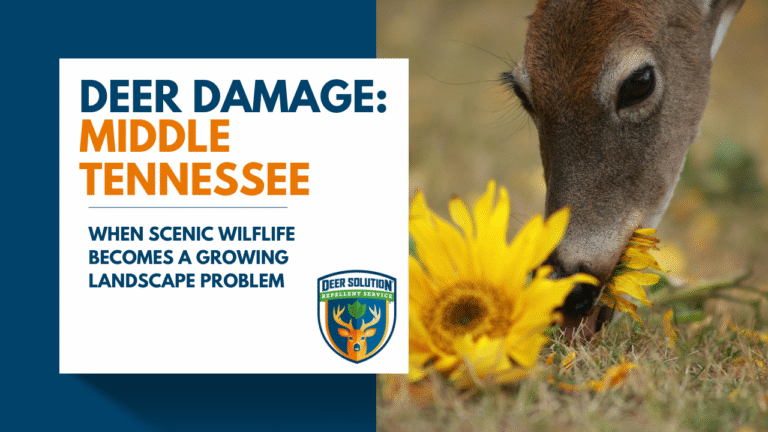


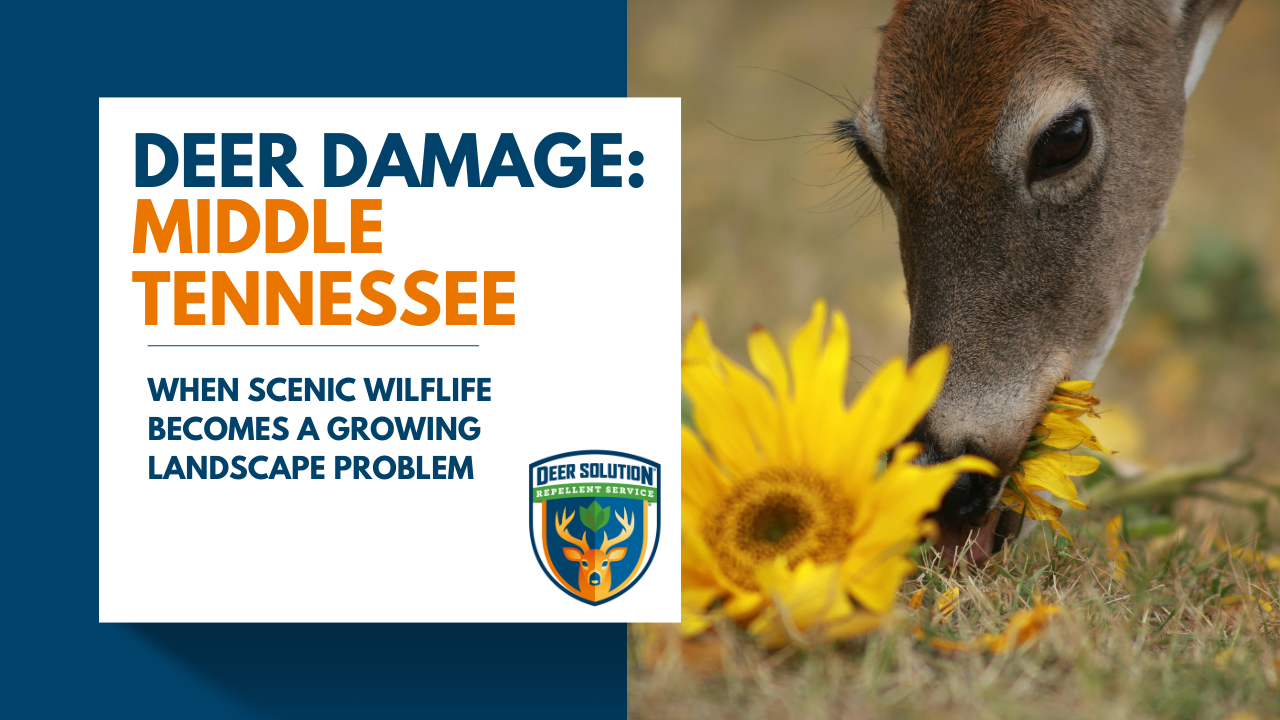
Middle Tennessee is known for its rolling hills, wooded neighborhoods, and thriving suburban communities. It is also prime habitat for white-tailed deer. For many residents, spotting deer in the backyard is part of the charm of living in the region. But that charm is increasingly coming with a cost.
Across Middle Tennessee, homeowners, landscapers, and municipalities are facing a common and growing challenge: deer damage that is no longer occasional, but persistent and, in many cases, escalating.
A Perfect Environment for Deer… and for Damage
Middle Tennessee offers ideal conditions for deer to thrive. The region’s mix of wooded areas, farmland, and expanding residential development creates what wildlife experts call “edge habitat,” where forests meet open spaces. This type of landscape provides both cover and abundant food sources, making it especially attractive to deer.
As development continues, neighborhoods are not replacing deer habitat, they are reshaping it into something even more appealing. Ornamental landscaping, irrigated lawns, and carefully selected plantings provide a steady, high-quality food supply that deer quickly learn to rely on.
At the same time, natural predators are limited, and hunting access is often restricted in suburban areas. The result is a stable and often growing deer population living closer to people than ever before.
Tennessee’s deer population was estimated at around 900,000 in recent years, and much of that pressure is concentrated in Middle and East Tennessee.
From Occasional Visits to Daily Feeding Patterns
What used to be occasional browsing has, in many neighborhoods, turned into routine feeding behavior.
Residents across Middle Tennessee report seeing multiple deer at a time, sometimes in groups of six, eight, or even more moving through yards on a daily basis. Once deer establish a feeding pattern, they tend to return repeatedly to the same properties.
This is where the real damage begins.
Deer are selective feeders, but in high-pressure areas, they expand their diet and consume a wide range of plants, including:
- Flowering annuals and perennials
- Shrubs and hedges like arborvitae and hollies
- Vegetable gardens
- Newly planted trees and soft growth
Over time, this repeated browsing doesn’t just damage plants. It can completely reshape a landscape.
- Why Deer Damage Feels Worse in Middle TennesseeThere are a few reasons why deer damage in this region tends to feel especially severe: Mild Winters Extend Feeding Seasons Unlike northern climates where food scarcity is seasonal, Middle Tennessee’s relatively mild winters allow deer to feed on landscapes for longer periods throughout the year.
- Rapid Growth Means Constant New Targets The region’s long growing season means plants are frequently producing fresh, tender growth. This new growth is exactly what deer prefer to eat.
- Suburban Density Concentrates Pressure As more homes are built into wooded areas, deer are not dispersed, they are concentrated. Multiple properties may share the same local herd, increasing browsing pressure on each yard.
It’s Not Just Landscaping
While plant damage is the most visible issue for homeowners, deer overpopulation creates broader impacts across Middle Tennessee.
- Vehicle collisions: Thousands of deer-related crashes occur each year, with peak activity in the fall.
- Property damage: Repeated feeding can destroy years of landscape investment
- Ecosystem strain: Overbrowsing reduces native plant diversity and allows invasive species to take hold
These impacts highlight an important reality: deer are not just passing through. They are actively shaping the environment.
Why Traditional Solutions Fall Short
Many homeowners initially try DIY approaches such as:
- Planting “deer-resistant” varieties
- Using store-bought repellents
- Installing small fences or deterrents
While these methods can help in low-pressure areas, they often fail in regions like Middle Tennessee where deer populations are high and feeding habits are well established.
Deer are highly adaptable. Once they become comfortable in a neighborhood, they quickly learn to ignore inconsistent deterrents.
A Shift Toward Consistent, Proactive Protection
The key difference in successfully managing deer damage is consistency.
Instead of reacting after damage occurs, more homeowners are turning to proactive approaches that:
- Start early in the growing season
- Maintain regular applications
- Adjust based on deer pressure and seasonal behavior
This type of ongoing strategy helps interrupt feeding patterns and trains deer to move elsewhere over time.
The Bottom Line
In Middle Tennessee, deer are not going away. If anything, they are becoming more integrated into suburban life.
What is changing is how homeowners respond.
Deer damage is no longer just a nuisance. It is a predictable, recurring challenge tied directly to the region’s environment and growth. The properties that fare best are not the ones that eliminate deer, but the ones that manage pressure consistently and realistically.
With the right approach, it is possible to protect landscapes and coexist with local wildlife. But in a region like Middle Tennessee, doing nothing is no longer a viable option.