



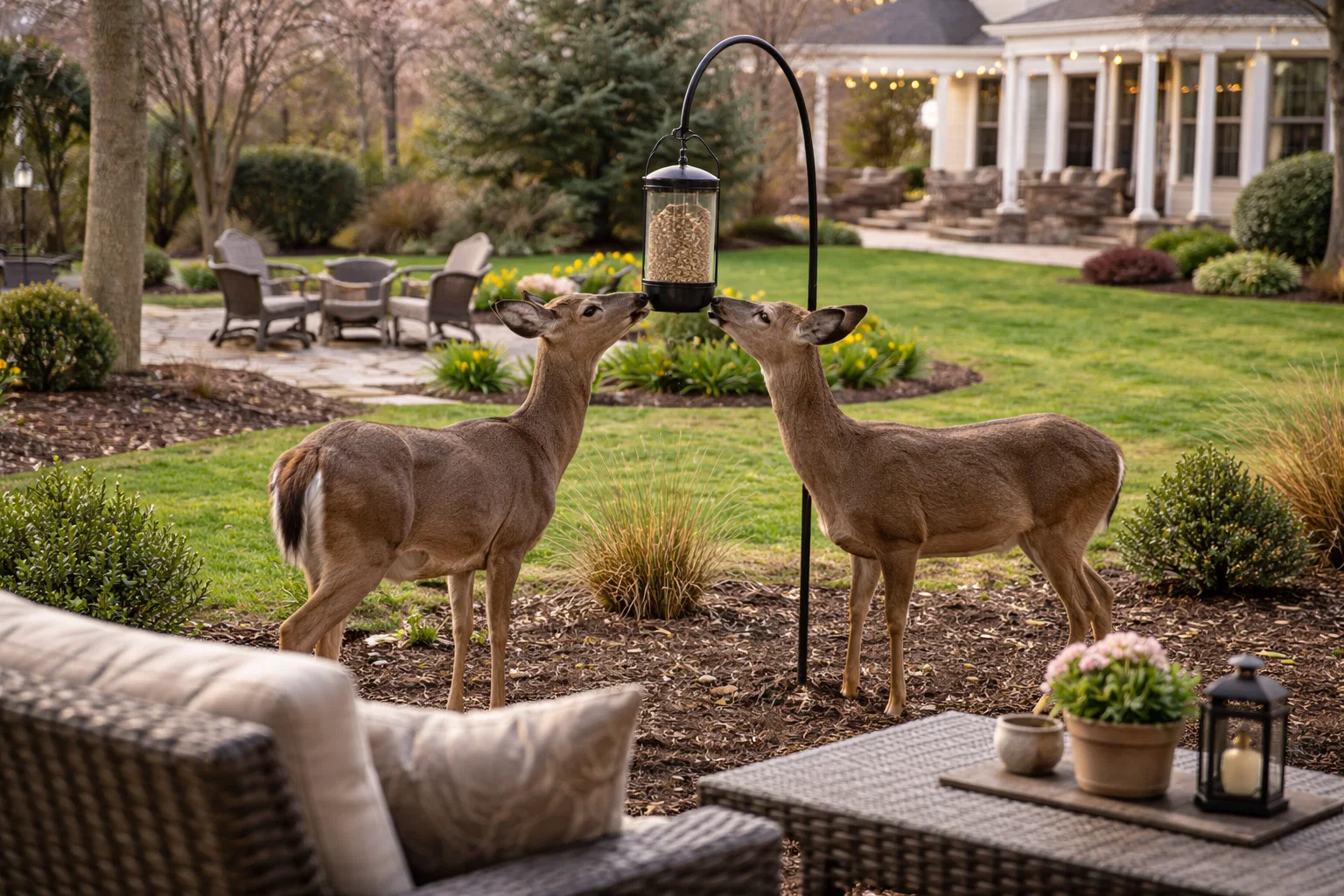
Feeding birds is one of the simple joys of winter. A well-placed feeder brings color, movement, and life to an otherwise quiet landscape. But this winter, many homeowners have noticed something unexpected visiting their feeders: deer.
At first glance, it may not seem like a big deal. The birds are happy, and the deer are just passing through. However, bird feeders can unintentionally create a new food source that draws deer onto your property and encourages them to stay.
Why Bird Feeders Attract Deer
Deer are opportunistic feeders. During the colder months, natural food sources are limited, and deer are constantly searching for easy calories. Bird seed that spills onto the ground becomes a convenient buffet.
Even if deer cannot reach the feeder itself, the seed scattered below provides enough incentive for them to return night after night. Over time, this can establish a consistent feeding pattern. And once deer become comfortable visiting your yard for seed, they may begin sampling nearby shrubs, evergreens, and early spring growth.
The Real Risk Is Habit
The biggest concern is not just the seed. It is the behavior that follows.
Deer tend to operate within familiar home ranges. When they discover a reliable food source, they build it into their routine. If a doe begins visiting your yard regularly, she may bring her fawns along and teach them the same route. What started as a simple bird-feeding setup can turn into a long-term deer traffic pattern.
Even properties that have not experienced significant winter damage can see increased browsing pressure in early spring once deer are already accustomed to visiting.
Signs to Watch For
If you have bird feeders up this winter, keep an eye out for:
- Tracks in the snow clustered around feeders
- Flattened grass or worn paths leading to and from the area
- Droppings beneath feeding stations
- Nibbling on nearby shrubs or low branches
These are signs that deer are incorporating your yard into their feeding routine.
Simple Ways to Reduce Attraction
If deer activity becomes noticeable, consider:
- Temporarily removing feeders during peak deer pressure
- Using catch trays to reduce seed spillage
- Regularly raking or cleaning up fallen seed
- Relocating feeders closer to the house and away from landscape plantings
Even a short break in access can discourage deer from building a habit.
Enjoy the Birds, Protect the Landscape
There is no need to give up bird feeding entirely. Awareness is simply key. Understanding how spilled seed can influence deer behavior allows you to make small adjustments that protect your larger investment in your landscape.
Your shrubs, evergreens, and early spring blooms represent years of growth and care. A proactive approach now can help reduce preventable damage later.
If you are seeing increased deer activity around your property and want guidance on protecting your landscape, we are always here to help.